


Festas de São João, Porto’s enormous midsummer festival, takes place on the night of June 23rd into the 24th. If you can arrange your trip around it, I highly recommend it. While the festival is celebrated all over Portugal, Porto is where the biggest party takes place.
This guide covers a week in Porto and Vila Nova de Gaia, including a two-day detour into the Douro Valley.
Disclosure: Some of the links on this page are affiliate links, meaning I may earn a commission if you click through and make a purchase—at no additional cost to you. All opinions are my own and based on my personal travel experiences.
Table of Contents
Day 1: Vila Nova de Gaia, Bolhão Market, and São Bento Train Station
Day 2: Festas de São João and Clérigos Tower
Day 3: Porto Cathedral, Port Tasting, and Cruise on Douro
Day 4: Matosinhos, More Port Tasting and Dom Luis I Bridge
Day 5: Douro Valley
Day 6: Douro Valley
Day 7: Free Day / Back to Airport
Porto Week-Long Itinerary
Day 1: Vila Nova de Gaia, Bolhão Market, and São Bento Train Station
Vila Nova de Gaia
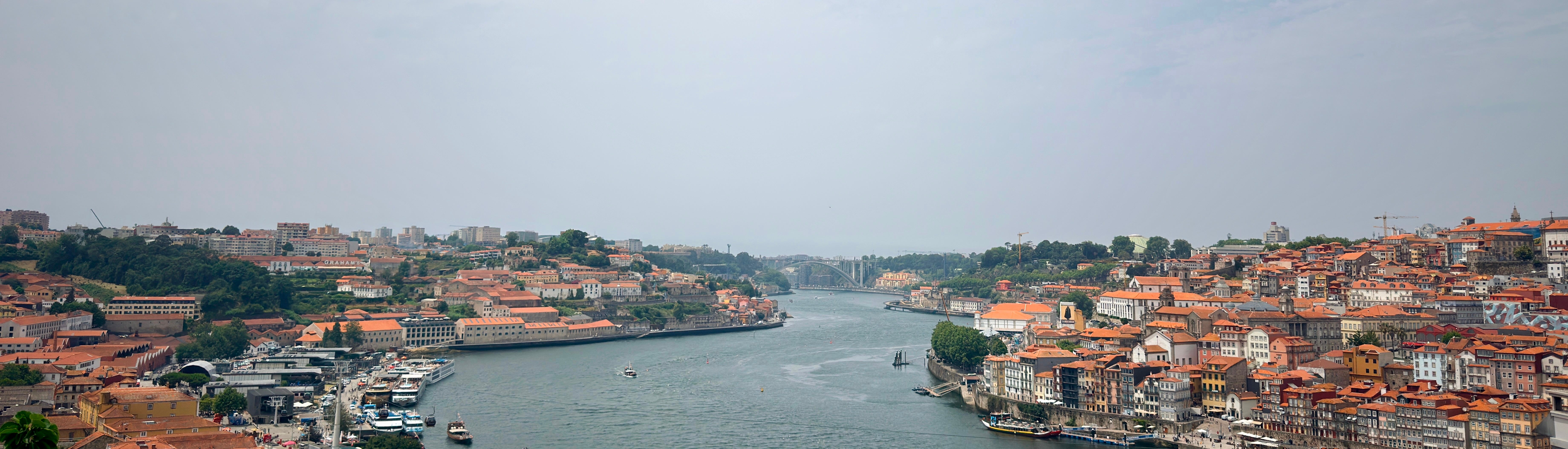
We stayed in an Airbnb in Vila Nova de Gaia for most of the trip, which is across the river from Porto. It is historically where Port wine cellars were built to age and store Port wines. The area was the perfect sanctuary for us for times when we wanted a little less chaos outside, in comparison to the main Porto area.
Mercado do Bolhão
I have an affinity for markets, so I went to Mercado do Bolhão twice during the trip. There are vendors selling tin fish, pâté, chocolate, coffee, fresh pasta, and much more! I bought some of my souvenirs here, and the pricing was at least better than the airport (low bar, I know).
We first grabbed some seafood at Casa das Ostras. While my favorite was the salmon, the barnacles were quite the adventure. Having never had them like this before, I wanted to challenge myself to partake in this culinary experience … except I had no idea how to eat it at first glance. A European lad stared at me with a look of pure confusion bordering on disgust as I tried to suck the meat out with its skin on. My partner figured out how to eat and showed me that you must grab the barnacle from the tail, twist the skin off, and then eat the flesh inside. Barnacles have a texture that reminds me of clams. Chewy and tasty.
Pro Tip: look up a video first before attempting; otherwise, you may be judged by a stranger like me
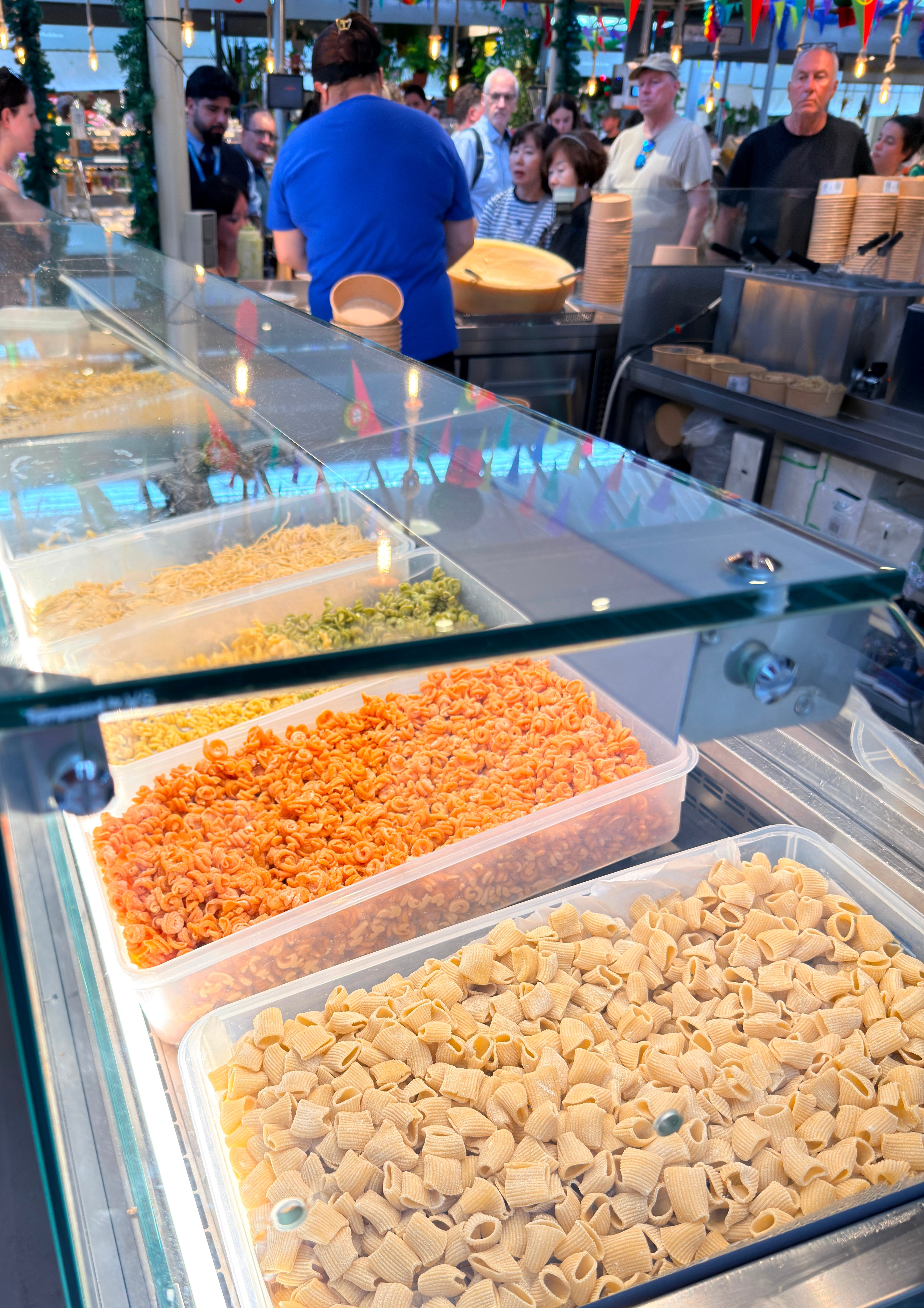
After the seafood experience, we got in line for fresh pasta, which was rolled around in a huge cheese wheel. I ordered spaghetti pasta with truffle sauce, and I didn’t do much else. The pasta was so simple, but so delicious.
Upstairs on the second floor of Bolhao was a flea market vibe, where you could find all sorts of gizmos and gadgets among the stalls. There’s also a large-sized tin fish sculpture that I recommend for fun photos.
Pastéis de Nata at Fábrica de Nata
I’ve long been a fan of Manteigaria since my trip to Lisbon, but I wanted a second comparison point, so I chose to stop in Fábrica de Nata, which was right in front of the market. Give them a shot if you have the stomach!
São Bento Train Station
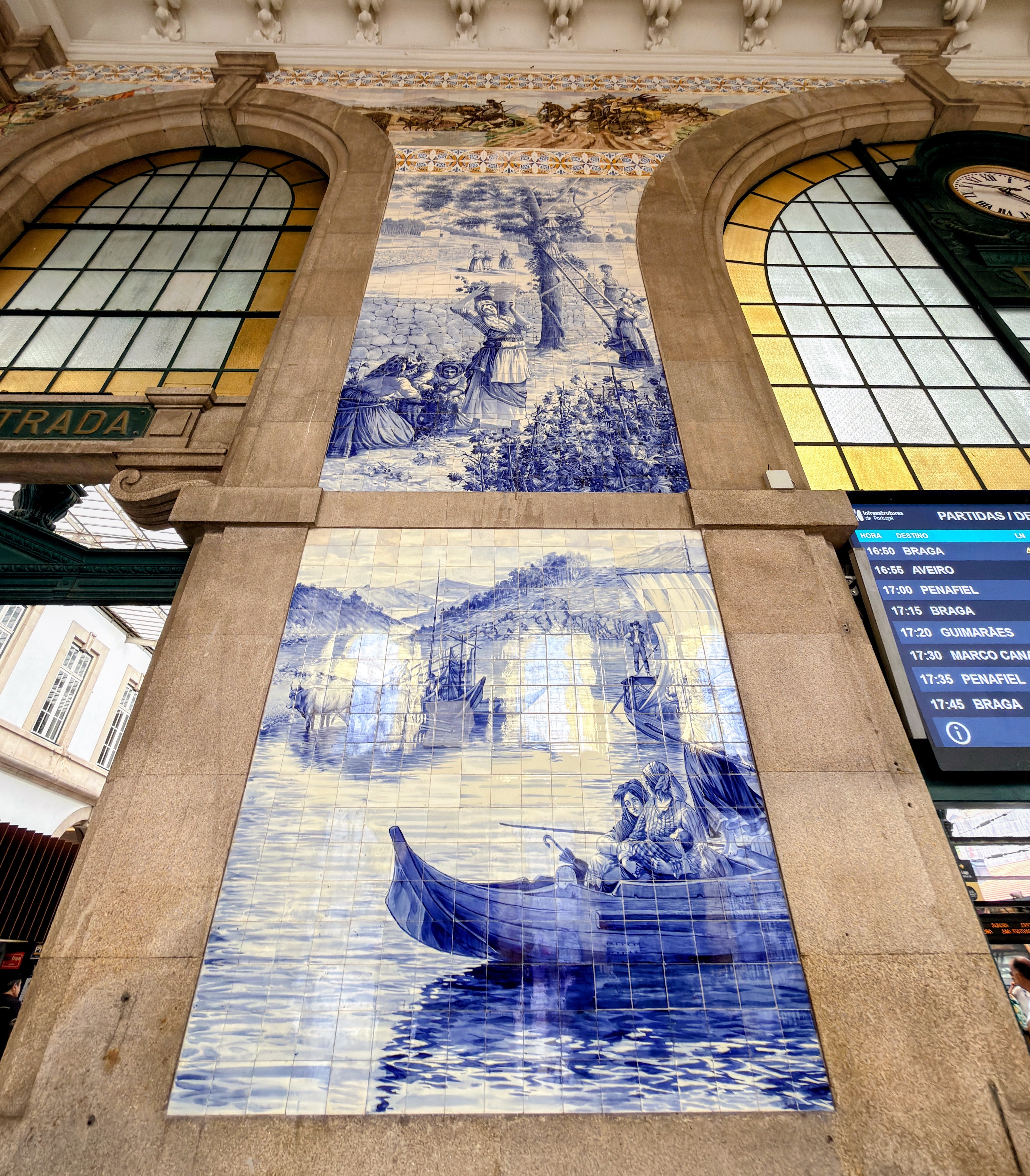
On the way back to Vila Nova de Gaia, we stopped by the São Bento station and saw the famous and beautiful azulejo tiles. The walls were covered with blue and white scenes depicting the time of the conquistadors, everyday life, and more. Because it was cloudy, the light inside was soft and diffused, and the tiles almost glowed. And best of all, you can see the walls for free.
Sunset on the Gaia Riverfront


We had dinner down at Gaia Riverfront, and then walked around in the area after. There is a massive rabbit sculpture embedded into a corner of a building facade partially made with salvaged trash and recycled material. The art is called “Half Rabbit” and was made by artist Bordalo II (If you’ve read my Lisbon street art post, you’ll already know I’m a fan of his work). There is a lot of seating along the river, so grab a gelato and enjoy the sunset.
Jardim do Morro
Jardim do Morro was on our hike back to the Airbnb and is another popular spot for picnics and sunset viewing. It is pretty crowded and usually has live music around sunset, so it is another option if you’d rather have a full panorama view of the Dom Luis I Bridge and Porto rooftops.
Day 2: Festas de São João, Soccer, and Clérigos Tower
The first order of business, either the day before or the day of, is to ensure that you have a plastic hammer for Festas de São João. They will be sold everywhere on the streets, so they should be easy to procure for a few euros. More on why later.
Imperial McDonald’s


The Imperial is not a regular McDonald’s. It’s much bougier, with chandeliers and tile walls. The breakfast sandwich was simple, with just eggs, cheese, and bacon. But the bread was noticeably better than anything I’ve had at McDonald’s in America, which I was pleasantly surprised about. Don’t rearrange your day for it, but it could be worth at least a glance.
Torre dos Clérigos
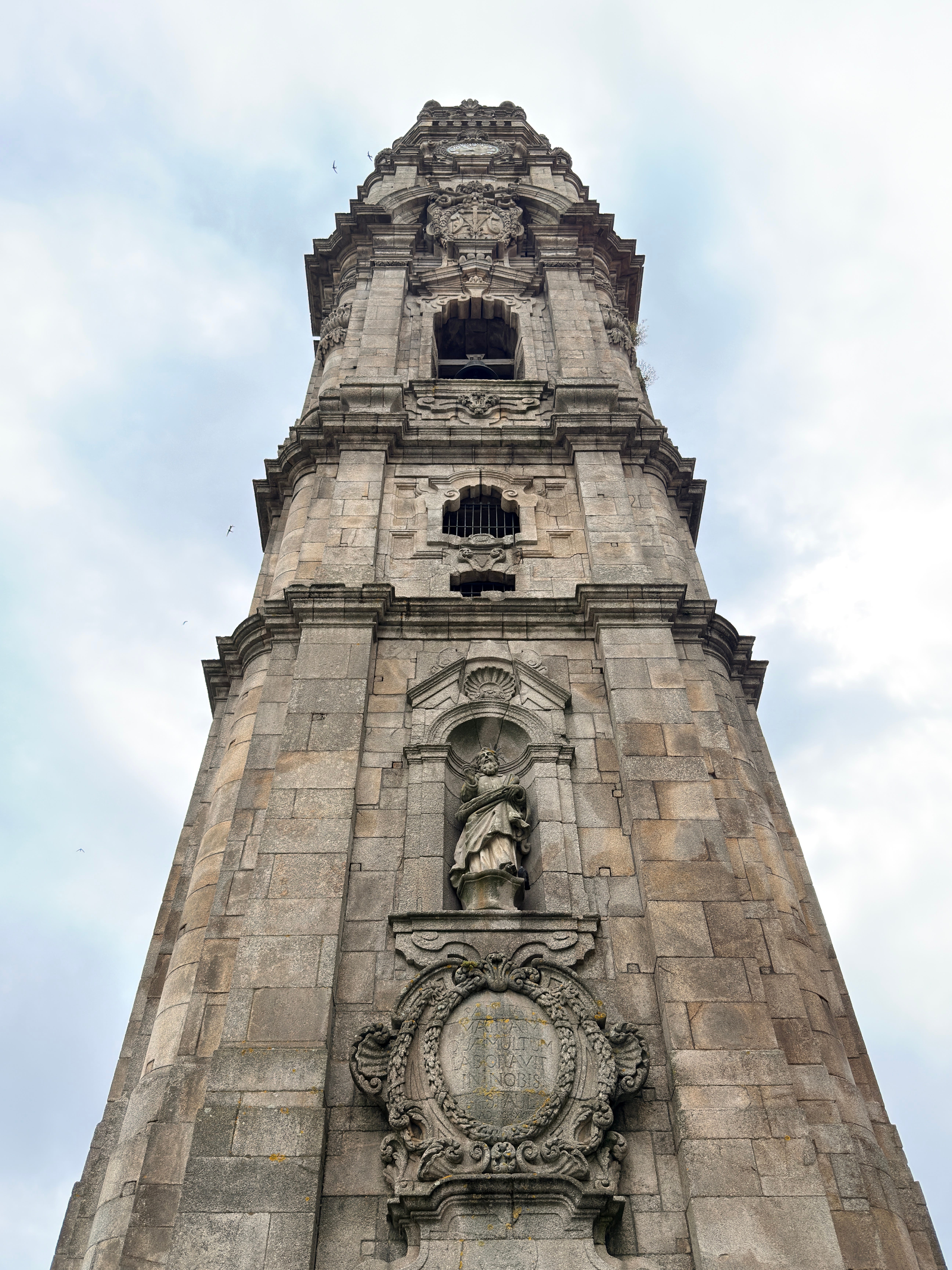
Clérigos Tower is one of the most recognizable structures in Porto. It is an 18th-century Baroque bell tower that once was the tallest building in Portugal. The views from the top are 360 degrees; however, the staircase is quite narrow, so skip it if you are claustrophobic and just look at it from the street. You can book tickets in advance online.
Igreja do Carmo
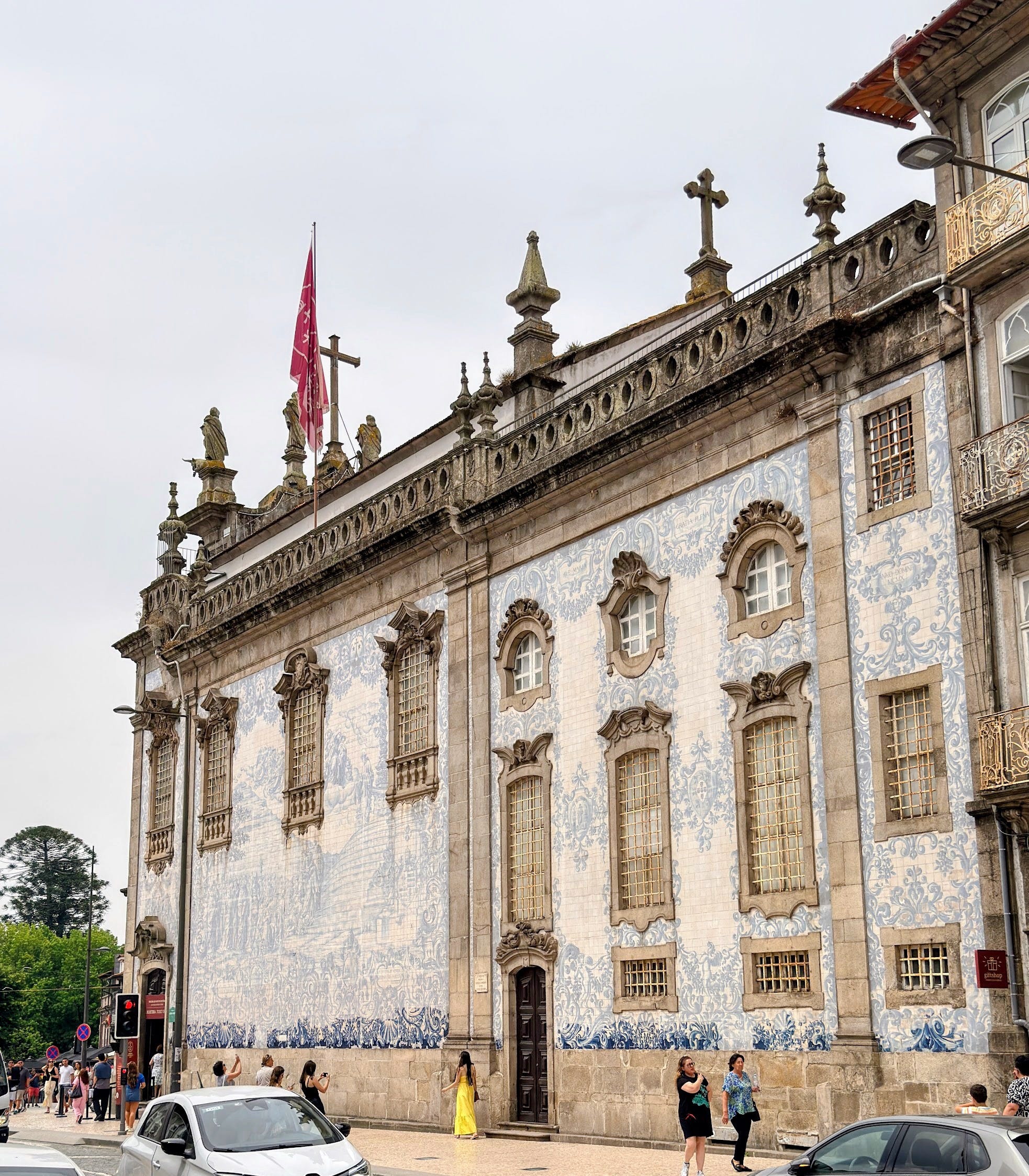
Igreja do Carmo is famous for the side wall that is covered in blue and white azulejo tiles. When we arrived, much of the panel was covered with a semi-transparent white film. My best guess is that this is potentially a conservation or restoration measure for the tilework. Still worth walking past outside to look at though, since it isn’t far from Clerigos.
Street Art / Mural Hunting
After lunch we went looking for street art. The standout was a large cat mural, and a massive portrait of an elderly man in a blue jacket and cap. Turns out the latter was a portrait of a Porto journalist and historian named Germano Silva, who was known for recording the city’s stories.
Google Maps: Cat mural | Germano Silva mural
Watch a Soccer Game with the Locals
Portugal was playing Uzbekistan, so I joined the locals at the square at Avenida dos Aliados to watch the soccer game. The crowd was WILD. Since the day I went was São João, people were using their hammers to make noise and celebrate with head bops. Portugal won 5-0, and Ronaldo, who had been getting torn apart in the press after a rough earlier game, redeemed himself a little that afternoon.
If Portugal happens to be playing during your visit, find a public square and watch with locals. It’s an experience that made me feel like I was part of Team Portugal.
Festas de São João


And then the highlight of the trip… Festas de São João. Earlier in the afternoon, you could already smell and see people hanging up flags in the streets and preparing food.
Lanterns, Hammer Tradition, Street Food and Fireworks
We crossed back to the Gaia side to experience São João from across the river, figuring it might be less crowded (still pretty crowded). The walk down to the Gaia waterfront at 9:15 PM was already full of excitement as lanterns were rising into the sky everywhere, drifting up like a scene in Tangled. It was heartwarming to see friends & families work together to light up the big lanterns and set them off into the sky.
Old people, young people, children… everyone is fair game for a tap on the head with that plastic hammer for “good luck” or “happy São João”, and everyone is bopping right back. The kids take this responsibility very seriously. The older ladies loved it a bit too much. I definitely had a delightful time with my hammer.


The street food was phenomenal. Our eats included sardinhas on toast, a bifana, a roast pig sandwich, a hot dog, and a healthy amount of sangria & port wine.
At 10:45 PM we found a spot on the Gaia waterfront and waited for fireworks. At midnight, the fireworks launched in full proper display, with some fireworks even coming off of Dom Luis I on the top level. It was worth every minute of standing around for it.
Music & Dancing
All the main music stages appeared to be on the Porto side. If dancing to live music until 4 AM is your priority for the night, factor that in. The Gaia side was festive, had some music too, and was fun.
Transportation & Getting Home
After midnight, the crowd thickens fast. The traditional move after fireworks is to march to Foz, the coastal neighborhood at the mouth of the Douro. There was some impatient crowd-pushing in the immediate aftermath of the fireworks that was not pleasant for the people trying to get home. In hindsight, if I hadn’t needed a bathroom, I might have stayed longer somewhere instead of heading back right at midnight. So give yourself some time flexibility on the exit if you can! And check the metro schedule for closures, as there were some for safety due to crowds and fireworks.
Festas de Porto Program | Metro Schedule
Day 3: Porto Cathedral, Port Tasting, and Cruise on Douro
The day after São João definitely required a bit of a later start, so keep the activities lighter or flexible. Even if you don’t stay out all night, you might hear the music blasting through the streets all night.
Porto Cathedral (Sé Catedral do Porto)
We arrived at the cathedral square to find a guy playing cello outside. He was genuinely good. The views of the city from the square are everywhere, though the surrounding area has a lot of abandoned and crumbling buildings mixed in.
Entry into the cathedral is about €4 per adult (as of 2026). Inside, the azulejo tiles line the cloister walls. The cathedral is dedicated to Nossa Senhora da Vandoma (Our Lady of Vendôme), and houses a sculpture of the Virgin Mary in an image that represents Porto and is featured on Porto’s official coat of arms.
Port Tasting in Gaia: Kopke
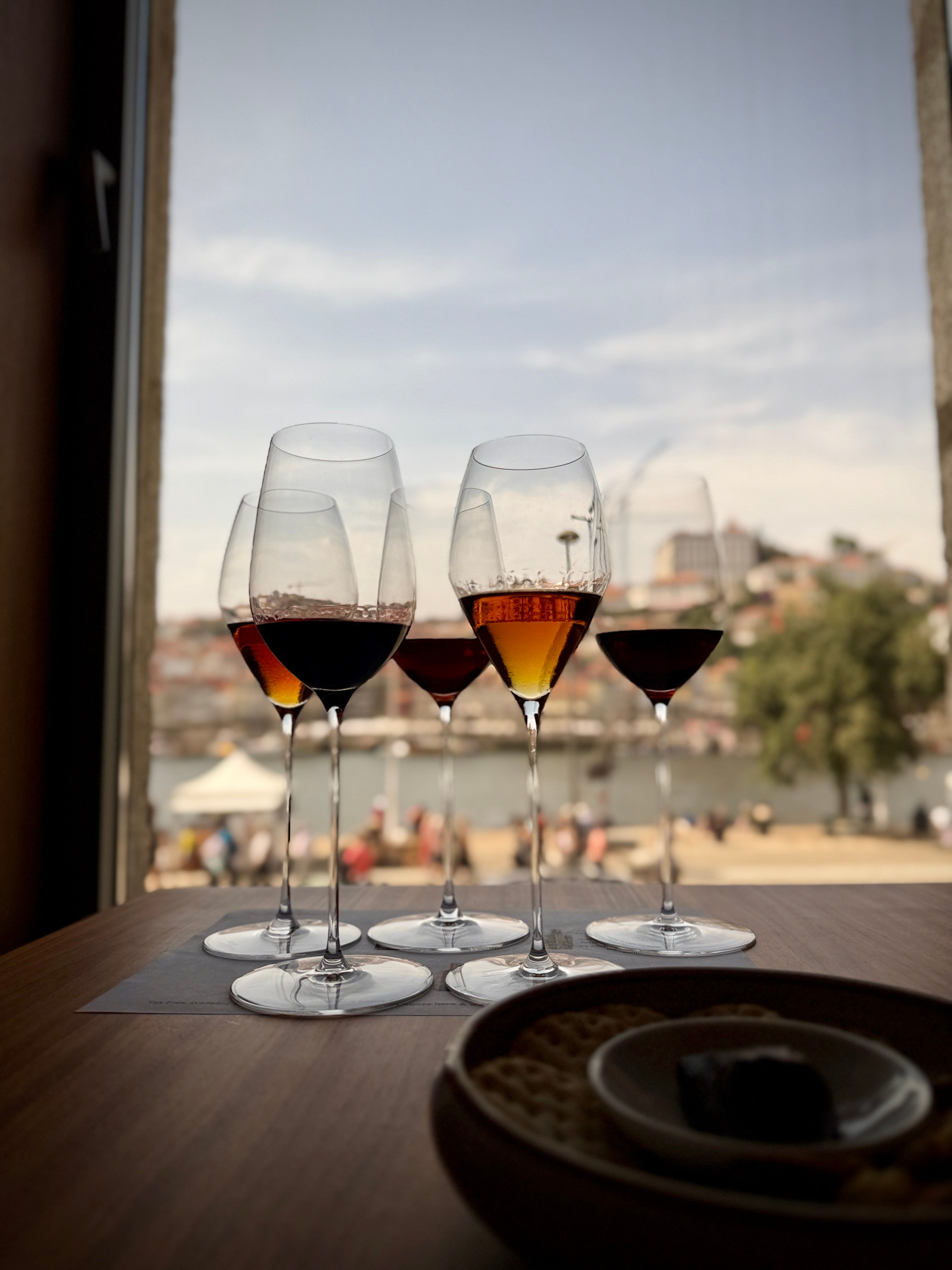
There are many big Port names here, from Graham to Taylor’s. The riverfront was lined up with the flags from each of the port houses. I broke up my tasting over the week (did only one per day). On Day 3, I went to Kopke wine tasting, which was honestly solid. They’ve been around since 1638. The tasting comes with chocolate, nuts, and crackers. Their tasting room is small, though, so don’t be too surprised if you have to try walking in a second time.
Sunset Boat Cruise on the Douro River
In the late afternoon, we had a sunset boat cruise booked out of the Gaia quay, which was a nice and relaxing way to see the city from the water as you move down the river toward the ocean.
Day 4: Matosinhos & More Port Tasting
Matosinhos
We took the train out to Matosinhos, the coastal fishing town just north of Porto. About an hour from our place on the Gaia side, with one switch at Trindade, so it was quite easy to navigate to.
Booínga Coffee
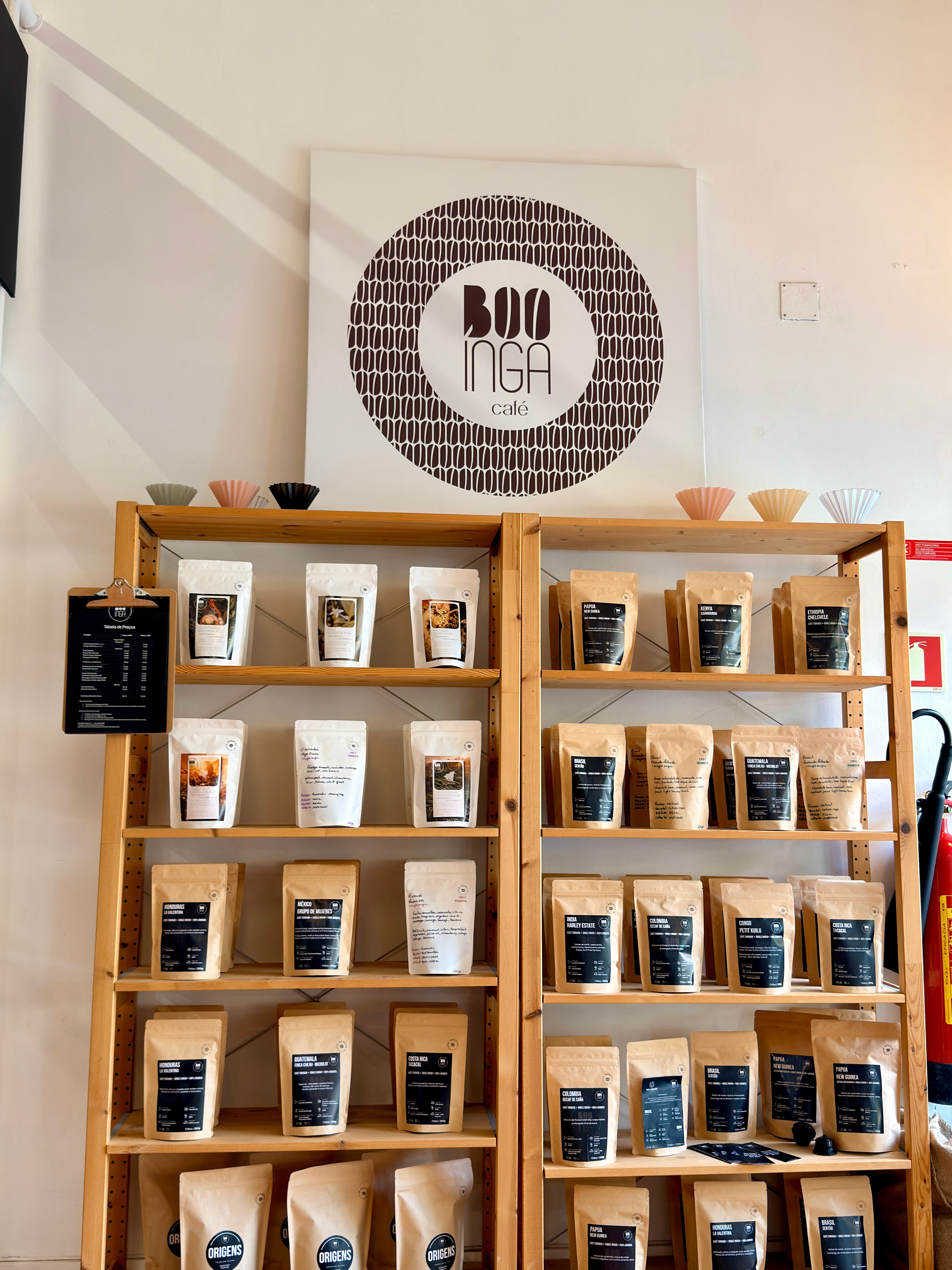
The barista knew exactly what she was doing. The espresso was measured with precision, and the water temperature she used brought out the full flavor of the beans. We asked her for recommendations with chocolate notes, and she pointed us immediately to a couple of options. We liked the place so much that we bought two bags of beans to bring home.
Exploring the Beach and Rua Heróis de França
There isn’t much sightseeing to do in Matosinhos, but we walked the waterfront boardwalk and came across the Monumento Tragédia no Mar, a sad bronze sculpture of widows and orphans staring out to sea. The statue was put up because of a 1947 storm that killed 152 fishermen from Matosinhos, leaving 72 widows and over 100 children without fathers. After that, we meandered over to the street called Rua Heróis de França, where fishmongers were selling their fresh catches of the day, mixed in with the waft of food from restaurants preparing for the lunch hour.
A Marisqueira de Matosinhos
This was the meal of the trip. Luxurious but worth the euro.
We had a noon reservation. I was struggling to figure out what to order, so the waiter walked me up to the seafood counter himself and went through everything on display: Carabineiros (aka scarlet shrimp), Lavagante (gigantic European lobster), santola (spider crab), sapateira (local brown crab), and multiple sizes and types of camarão (shrimp) and crawfish.
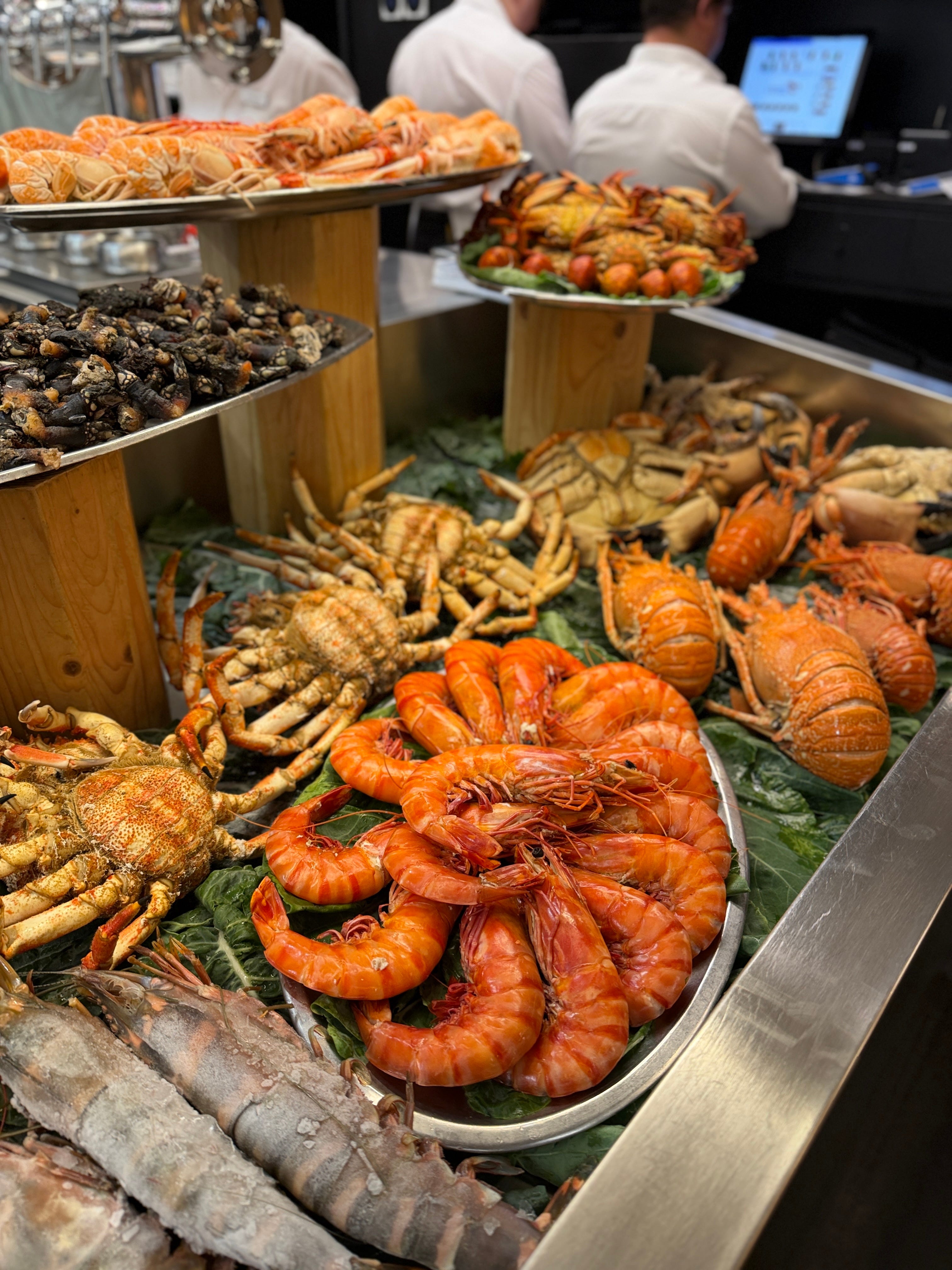
Top left and clockwise: Medium shrimp, scarlet shrimp with rice, seafood display, and brown crab “all natural”
We ordered two Carabineiros, grilled over rice with a sauce that had a nice kick. We added the brown crab, which typically comes with a sauce made from crab innards mixed with mayo. From my adventures in Lisbon, I have found that I personally didn’t prefer the sauce because I wanted the flavors of the crab to come through. So I told the waiter, “No sauce.” He looked at me, slightly bewildered, and clarified: “All natural?” “Yes. All natural.”


The crab was incredible. We finished the main course with two medium shrimp served cold like cocktail shrimp with mayo-based dipping sauce, and a half bottle of white wine. While we were eating, there were regulars, mostly men who have seen things, who just plopped right at the counter and quickly served some type of stew. Perhaps it was the arroz de marisco (seafood rice) that Matosinhos is known for.
The total bill came to around $207 USD, which included wine, rice, and bread. The scarlet shrimp alone would have been enough to justify the trip out to Matosinhos. We had considered the lobster too, but knew we didn’t have room. I rolled out with a full food coma and passed out in the Uber on the way home.
Port Tasting in Gaia: Niepoort Wine Cellar
Book ahead for tastings at Niepoort. They are by appointment only, and the entrance is very easy to miss. Look for the doorbell, as there are no big signs.


Niepoort has been family-run for six generations. They showed us the back cellar where they do things differently from most Port houses. After four years in barrel, wine goes into repurposed glass bottles sourced from a former apothecary that went bankrupt, where it ages for decades. One bottle produced this way was completely clear and sold at auction for over €100,000! They’re also shifting away from Port as consumer demand has shifted, and are getting more into table wine production.
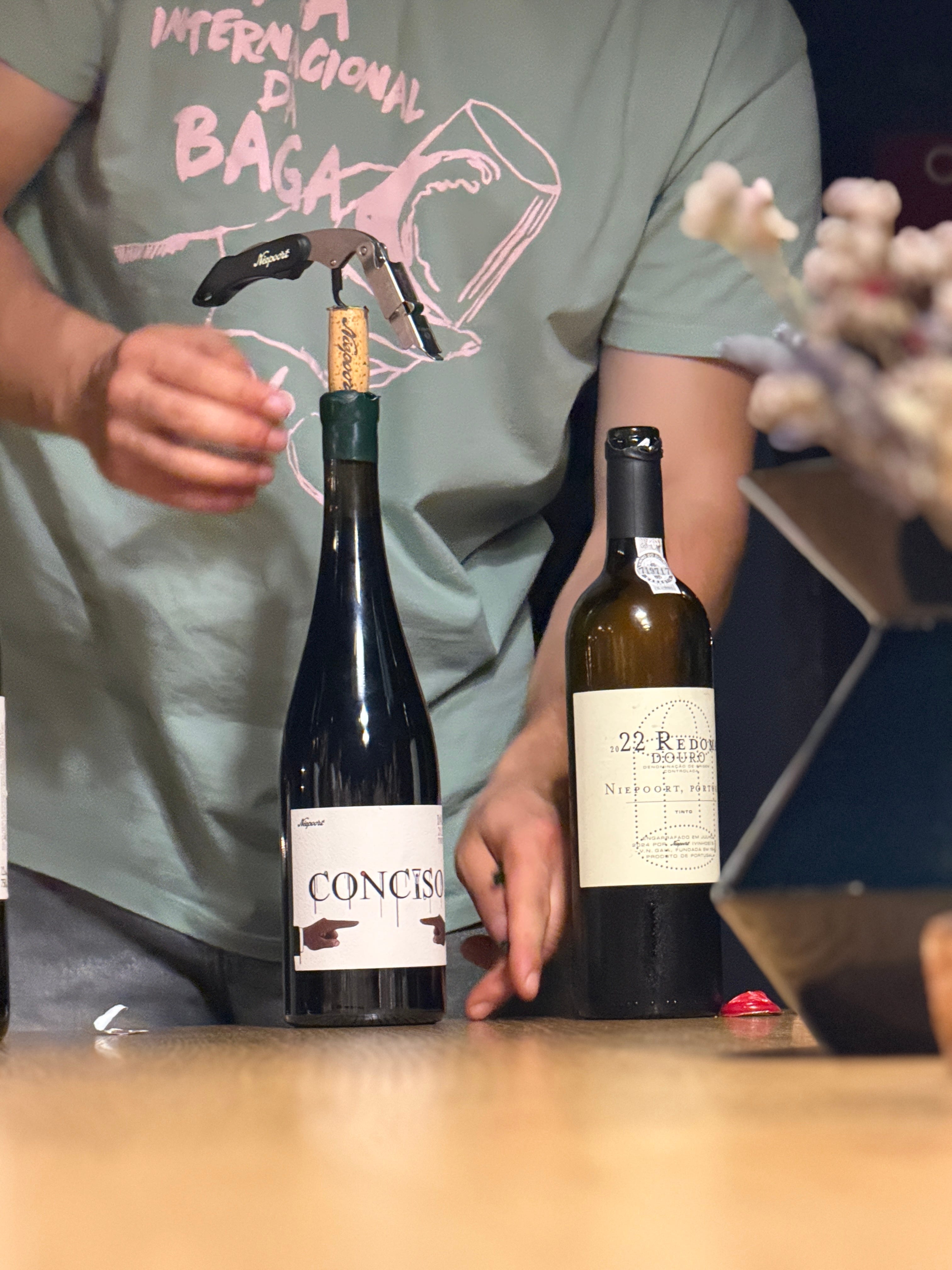
The tasting covered five wines: two whites, two reds, one Port. Our guide was knowledgeable and opinionated (with some dry humor). When someone in the group asked about rosé Port, the eye roll and heavy sigh said it all before he composed himself and gave the political answer of it being “good for cocktails”.
Walk Dom Luis I Bridge
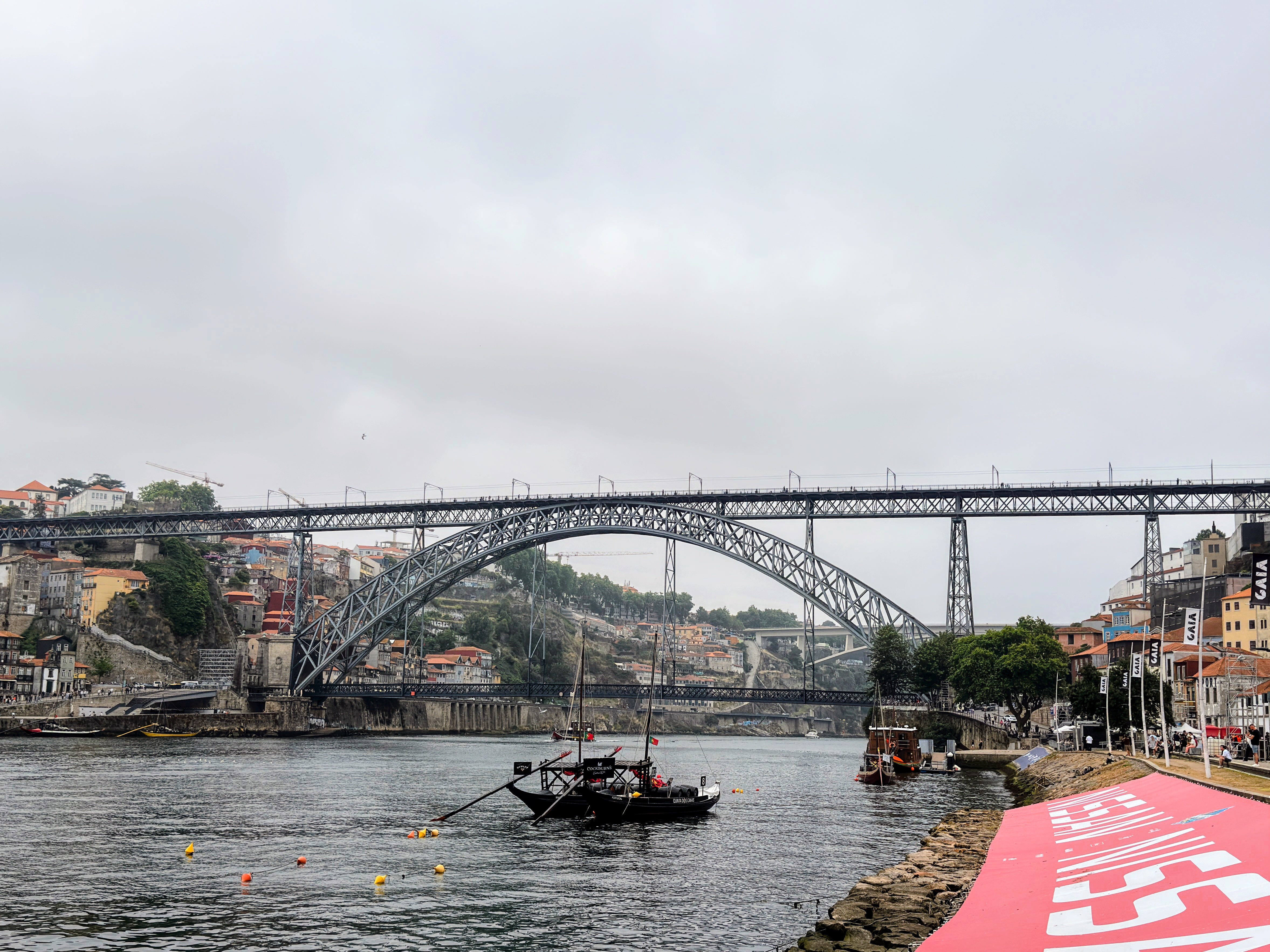
If you haven’t already, I recommend walking across the Dom Luis I Bridge. It’s quite breezy, but then you get a nice view of the Douro River.
Day 5-6: Douro Valley
Douro Valley is a well-known wine region in Portugal that is famous for its beautiful terraced landscape. While Douro Valley can just be a day trip, I encourage an overnight stay for the full vineyard experience. My full recommendations can be found in the post below:
A Vineyard Stay in the Douro Valley: Quinta de la Rosa

Pinhão has fewer than 1000 residents as of 2026, but hundreds of thousands of visitors. About half of them arrive on cruise ships (I saw at least five during my stay). This post covers getting to Pinhão and staying at Quinta de la Rosa.
Day 7
Free day! Rest, recover, and head back home.
Frequently Asked Questions
How many days do you need in Porto?
A whole week gives you time to fully explore the city, enjoy the festival, and have a side excursion to the Douro Valley!
How to Navigate Porto
Bolt vs Uber
Bolt runs about half the price of Uber in Porto: 4 euros vs 11 for a typical ride. The trade-off is that the drivers seem to have watched a lot of Fast and Furious. Smooth on the freeway, alarming on side streets. For the price difference, it’s a hard deal to pass up. Just maybe hold onto something.
Metro
The metro was very convenient for the entire trip, if we didn’t feel like walking. Highly recommend, especially if the place you are staying at isn’t too far from the station. We also used the metro lines to get to and from the airport.
Walking
Porto has a lot of hills too, so as they say… every day was a leg day.
Train
The train is good for going to other cities or regions such as Lisbon or Douro Valley. One thing worth knowing: the train to Pinhão departs from Campanhã station, not São Bento. On the train we rode to Pinhão, it seemed like the red car had big seats and windows that are suitable for families, though I’m not sure if that’s a true statement for every car/train.
Other Travel Planning Resources
📲 Stay Connected with eSIM


